

What is enduri?
enduri is an online learning coach for children aged 9–12. It teaches learners how to plan, study and check their own work, using the homework and classwork they already have rather than invented exercises. enduri does not give answers. Eni, the AI learning coach, guides each child through the learning process with questions and strategies until they can do it on their own.
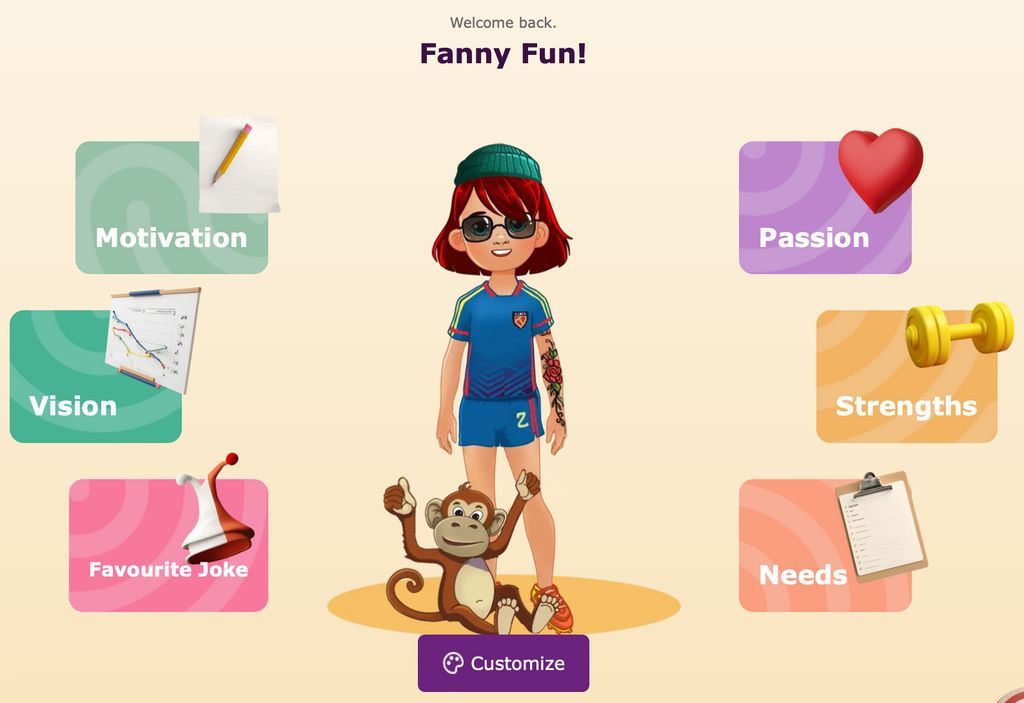
Every learner starts with a Learner ID: a short questionnaire that maps their strengths, needs, motivation and goals. It is free, delivered as a PDF, and is the starting point for personalised guidance. The method then follows five steps: Learner ID, choose the task (plan, understand, remember, reflect or check), choose a strategy that fits it, use the strategy with support from Eni when needed, and reflect on what worked. The Progress Card makes visible the strategies a learner uses, the goals they reach and how their confidence grows.
The method rests on a three-pillar principle (person and needs, skills and strategies, dialogue and cooperation) and on five coaching principles Eni follows in every session, SO¡FAR: Support, Optimism, Friction, Action, Reflection. Conversations are guided and limited to learning, with no open-ended chat. Role-play and prompt tricks don’t work. If a child is distressed or asks Eni to keep a secret from an adult, Eni points them to a trusted adult.
In schools, enduri runs alongside the existing curriculum with nothing new to plan. Teachers can see which pupils are stuck on method rather than on the subject, and they get coaching and feedback tools. At home, enduri supports independent learning without adult supervision. enduri was founded by teacher and education journalist Christa Wuethrich. It has been developed with academic researchers since 2023 and was piloted at Arborana, a private school in Switzerland. It is available in English and German.


 Company | Business Name: Partner and Chance LtD HQ Location: Malta Founded: 2023 |
| Age Range | 8-10, 11-13 |
 Features | Metacognitive Learning21st-century Learning SkillsLearn To LearnProgress-orientedStrengths-basedLearning SkillsIndividually TailoredResearched BasedLearning PlatformMotivational ToolContent Independant |
 Languages | German, English |
 Accessibility | Moderate features |
 Policies |  Terms of ServicePrivacy Policy |
 Requirements | Internet - Low BandwidthInternet - High BandwidthDesktop - MacDesktop - WindowsDesktop - ChromebookDesktop - LinuxMobile - iPhoneMobile - iPadMobile - WindowsMobile - Android enduri is the first online learning platform that puts learning skills—not content—at the center. Content changes, AI delivers answers instantly, but skills are what remain essential. With enduri, students don’t just memorise; they learn how to think, reflect, and apply knowledge in real contexts. Our mission is to help learners build, add, and master the core skills that make learning meaningful — both in school and in life. |
 Set Up | 5 min |
 Training | In PersonLive OnlineWebinarsDocumentationVideos Using enduri means more than just accessing a platform – it means joining a partnership.enduri cares - because as a user, you are part of our shared mission: bringing learning how to learn to where it truly belongs – into every classroom and to every single student. |
 Support | EmailFAQs/ForumKnowledge Base enduri is open to feedback, critique, and discussion – and we’d love to hear your own learn-to-learn story. |
| Home Learning | Parent Access Anyone can create the account. There is no separate access code for parents. The student platform is fully transparent and designed to be shared openly between students and parents. |
AIAI usage This product uses AI. AI-powered features speech to text text to speech Real-time question answering Technology type Natural Language Processing Technology used to understand or generate human language (e.g. chatbots, language analysis, speech-to-text)  Computer Vision AI that interprets visual information from images or video (e.g. scanning student work, facial recognition, object tracking) Generative AI AI that creates new content such as text, images, or video (e.g. AI-generated quizzes, lesson plans, dialogue simulations) Machine Learning Algorithms that learn from data to make predictions or decisions (e.g. adaptive learning, automated feedback) Robotics AI embedded in physical systems (e.g. programmable learning bots, interactive classroom robots) High-risk use settings Access Determination Used to make decisions about access to, or admission into, an educational programme (e.g. automated admissions systems) Behavioural Monitoring or Detection Used to analyse behaviour, emotions, or cognitive states (e.g. engagement tracking, emotion detection) Learner Evaluation Used to assess student performance or outcomes (e.g. grading, test scoring, proctoring, adaptive progression, academic placement) | |
enduri PricingPricing Plans Free TrialPaid Subscription enduri pricing starts from €14 / month We offer a fixed price for individual users (parents or students).  Optimised for a quick response | |


Compare enduri with...


enduri Reviews
No reviews.
This product has not received any reviews yet. Be the first!
Pedagogy


Certified by Education Alliance Finland,
EAF Evaluation is an academically-backed approach to evaluating the pedagogical design of a product. EAF evaluators assess the product using criteria that covers the most essential pedagogical aspects in the learning experience.
Learning goals
Certified by Education Alliance Finland
The supported learning goals are identified by mapping the product against the selected reference curriculum and soft skills definitions most relevant for the 21st century.
- Practicing persistent working
- Practicing to set one's own learning goals
- Developing problem solving skills
- Practicing to take responsibility of one's own learning
- Encouraging the growth of positive self-image
- Enabling the growth of positive self-image
- Practicing versatile ways of working
- Practicing to find ways of working that are best for oneself
- Practicing decision making
- Practicing strategic thinking
- Encouraging to build new information and visions
- Practicing to evaluate one's own learning
- Practicing time management
- Learning to face failures and disappointments
- Familiarizing with the influences of media and understanding its affordances
- Learning to view and consider media and advertising critically
- Practicing to find, evaluate and share information
- Practicing to use information independently and interactively
- Learning to understand and interpret diverse types of texts
- Learning to acquire, modify and produce information in different forms
- Using technology as a part of explorative and creative process
- Learning to understand and interpret diverse types of texts, from vernacular to academic
- Practicing logical reasoning to understand and interpret information in different forms
- Connecting subjects learned at school to skills needed at working life
- Learning to plan and organize work processes
- Learning consumer knowledge and smart economics
- Learning to use foreign language in work context
- Encouraging positive attitude towards working life
- Enabling the growth of positive self-image
- Practicing to give, get and reflect feedback
- Practicing to express own thoughts and feelings
- Learning to understand the meaning of rules, contracts and trust
- Practicing to use foreign language as a communication tool
- Practicing communication through different channels
- Learning decision-making, influencing and accountability
- Practicing to argument clearly own opinions and reasonings
- Encouraging to build new information and visions
- Supporting student to build their own linguistic and cultural identity
- Learning about different languages
- Practicing to notice links between subjects learned
- Learning to combine information to find new innovations
- Encouraging to build new information and visions
- Learning to build information on top of previously learned
- Practicing to notice causal connections
- Practicing to take care of own and other people’s safety
- Practicing to take care of one's own and other people’s safety
- Encouraging the growth of positive self-image
- Practicing to recognize and express feelings
- Practicing to look things from different perspectives
- Practicing to notice causal connections
- Practicing to use imagination and to be innovative
- Encouraging students to be innovative and express new ideas
- Practicing creative thinking
- Creating requirements for creative thinking
- Practicing to evaluate one's own learning
- Practicing to set one's own learning goals
- Practicing to take responsibility of one's own learning
- Practicing to find ways of working that are best for oneself
- Practicing persistent working
- Learning to notice causal connections
- Practising visual recognition
- Practicing to observe spoken and written language
- Practicing categorization and classification
- Practicing memorizing skills
- Practicing letters, alphabets and written language
- Using technology as a part of explorative process
- Using technology for interaction and collaboration
- Practicing logical reasoning, algorithms and programming through making
- Understanding and practicing safe and responsible uses of technology
- Using technological resources for finding and applying information
- Using technology as a part of explorative and creative process
- Understanding technological system operations through making
- Building common knowledge of technological solutions and their meaning in everyday life
- Learning to plan and design own written content and textual representations
- Practicing keyboard skills and touch typing